- View Mobile Number
mkr.refra@gmail.com

Posted by Admin on October, 07, 2026
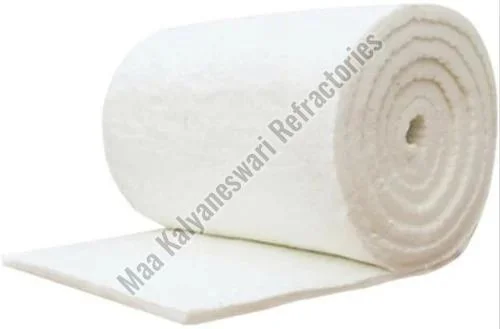
A Refractory Ceramic Fiber Blanket is a lightweight and highly efficient insulation material designed for applications involving extreme temperatures. It is widely used in furnaces, kilns, boilers, heat treatment units, industrial ovens, and other thermal processing systems. Because of its excellent heat resistance and low thermal conductivity, it helps industries improve energy efficiency while protecting equipment from excessive heat.
What is Refractory Ceramic Fiber Blanket?
A Refractory Ceramic Fiber Blanket is generally manufactured from high-purity alumina and silica fibers. These fibers are processed into a flexible blanket without the need for heavy binders. The result is a material that can withstand high operating temperatures while remaining easy to handle, cut, and install.
Its flexible structure makes it suitable for both flat and irregular surfaces. This is particularly useful in industrial equipment where conventional rigid insulation may be difficult to install.
Excellent Thermal Insulation
One of the key benefits of a Refractory Ceramic Fiber Blanket is its excellent thermal insulation performance. It reduces heat loss from furnaces and other high-temperature equipment, helping maintain stable internal temperatures.
Lower heat loss can also contribute to reduced fuel consumption. For industries operating furnaces continuously, even small improvements in insulation can make a significant difference in overall energy usage.
Common Industrial Applications
Refractory ceramic fiber blankets are used in several industries, including steel, ceramics, glass, petrochemical, power generation, and foundries.
They are commonly installed as furnace linings, kiln insulation, boiler insulation, expansion joint filling, pipe insulation, heat shields, and backup insulation behind refractory materials. They may also be used around doors, burner areas, ducts, and other locations where high-temperature protection is required.
Lightweight and Easy to Install
Compared with many traditional refractory materials, ceramic fiber blankets are relatively lightweight. This reduces structural load and makes handling easier during installation.
The material can be cut into different shapes and sizes using suitable tools. Installers can therefore adapt the blanket according to equipment dimensions and application requirements.
Choosing the Right Ceramic Fiber Blanket
Before selecting a Refractory Ceramic Fiber Blanket, buyers should consider operating temperature, thickness, density, chemical resistance, and application conditions. Different grades are available for different temperature ranges.
The insulation should also be selected according to the furnace atmosphere and installation method. Using the correct specification helps improve service life and thermal performance.
Conclusion
A Refractory Ceramic Fiber Blanket provides an effective solution for high-temperature insulation in demanding industrial environments. Its low thermal conductivity, lightweight construction, flexibility, and temperature resistance make it suitable for a wide range of thermal applications. Choosing the right grade and thickness can help industries improve heat retention, reduce energy losses, and maintain safer and more efficient operating conditions.
Search
Category
Recent Posts
- Refractory Ceramic Fiber Blanket for High-Temperature Insulation Applications
- Refractory Ceramic Fiber Blanket: High-Performance Thermal Insulation
- High-Quality Refractory Materials For Industrial Applications
- Buy Smart: Why Your Refractory Ceramic Bricks Should Come from a Trusted Manufacturer
- All You Need To Know About Refractory Tundish Well Block


Leave a Comment